
Here is a calculation we all make, almost instinctively: no alcohol, so inevitably cheaper. It is logical. It is also wrong.
Because a quality alcohol-free bottle costs no less than a classic wine or beer — often, it even costs a little more. And the reason can be summed up in one sentence: removing the alcohol does not mean removing the cost. The alcohol is removed. A great deal of work is added in its place.
At Gueule de Joie, France's first alcohol-free wine shop since 2019, we have chosen never to compromise on what goes in the glass. So let us speak frankly about what you are really paying for when you buy a beautiful alcohol-free bottle — and, at the end, about the best time of year to discover one.
In brief — A quality alcohol-free drink starts from a real wine or a real beer, from which the alcohol is then removed by a delicate and costly process. Far from being a simple subtraction, premium alcohol-free requires additional expertise and first-rate ingredients. Its price is the price of flavour — not the price of alcohol. And if a selection is on sale right now, it is never at the expense of quality: it is the ideal opportunity to be convinced of that. See the selection →
"Less alcohol, so less expensive?" The reflex that gets it wrong
We are used to associating the price of a drink with its strength: the stronger it is, the more expensive it is. Alcohol taxes have reinforced this reflex for ever. Hence the persistent intuition: a 0.0% drink should cost next to nothing.
Except that the price of a great wine or a characterful beer has never really been in the alcohol. It is in the grape, in the hops, in the time, in the hand that blends. Remove the alcohol, and all of that remains exactly where it was. Better still: for the producer, even more work is required.
It must be said that the category has made a spectacular leap in recent years. Producers have invested, refined their processes, recruited passionate oenologists, brewers and craftspeople. Today's standard is remarkable — and this move upmarket has a perfectly logical flip side: it comes at a cost.
Removing the alcohol is extra work — never less
People sometimes imagine that an alcohol-free wine would be a wine "that was never allowed to ferment". The reality is the exact opposite. A real wine is made first — harvest, fermentation, vinification, from start to finish. Only then is the alcohol removed, at low temperature, to preserve the most delicate aromas. Two steps instead of one, state-of-the-art equipment, and a portion of the volume that is inevitably lost in the process.
Concretely, three main methods coexist, each requiring its own mastery.
Vacuum distillation removes the alcohol at very low temperature, under reduced pressure, so as not to "cook" the aromas: precise, slow, and energy-intensive.
Reverse osmosis passes the wine through an extremely fine membrane that separates the alcohol from the rest — a high-tech filtration process.
Fermentation arrest retains some of the grape sugars for a fruitier profile.
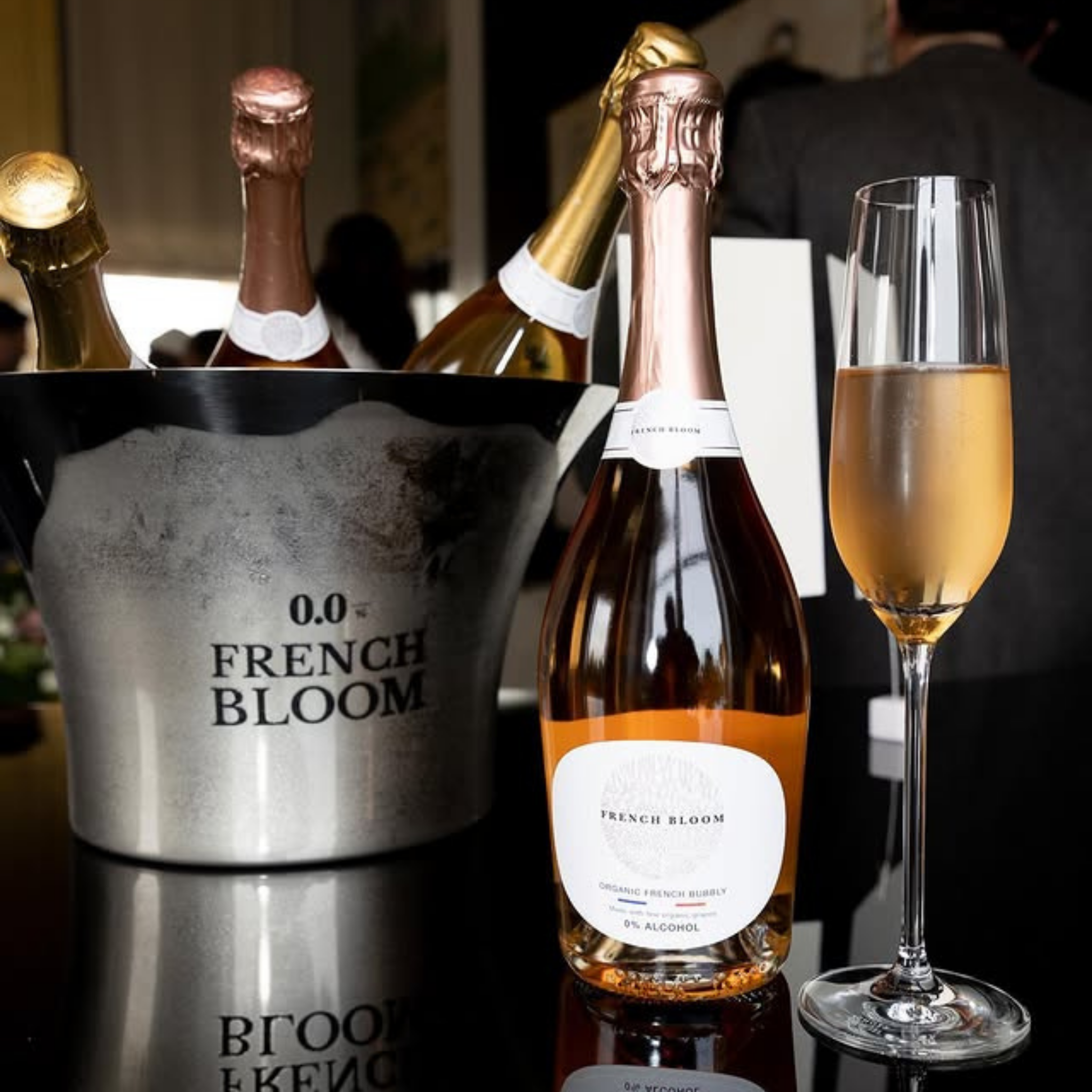
This care can be savoured in an ISH Spirits sparkling rosé or a Kolonne Null Rosé Les Quatre Tours, whose bubbles and red fruits survive the process intact.
The same logic applies to beer: a real beer is brewed, hopped and fermented, then carefully dealcoholised. Each time, a delicate operation is added to an already finished product. That is why this sentence deserves repeating: removing the alcohol does not mean removing the cost.
💡 The wine shop's tip: to enjoy an alcohol-free drink at its true value, serve it at the same temperature as its classic equivalent, in a beautiful glass. That is where all the producer's work reveals itself — the freshness of a rosé, the hops of an IPA, the spices of an aperitif.
It all starts with first-rate ingredients
Without the alcohol, it is the aromas that take centre stage: the fruit, the hops, the botanicals express themselves unmasked. Hence ingredient choices as demanding as for any great drink — identified grape varieties such as Grenache, Merlot or Chardonnay, noble hops, botanicals distilled one by one for spirits. And, very often, organic.
A few concrete examples from our cellar: the OddBird Addiction Bio 0% red starts from a real organic Spanish red wine; the OddBird Organic Blanc N°2 from an organic white from northern Europe; the Cypher canned rosé is an organic French wine; a Botaniets Original 0.0% distils juniper, rosemary and Sicilian citrus peel. In every case, quality is there from the outset — and that is what you find in the glass.
One cellar, a thousand ways to do it well
Alcohol-free is not a single recipe: it is a mosaic of expertise. A dealcoholised wine has nothing in common with an alcohol-free brewed beer, which has nothing in common with a distilled spirit, a botanical aperitif, a craft soda or a living kefir. Each family has its own techniques, its own constraints, its own craftspeople — and each has its rightful place at a beautiful table.
That is also why we bring together more than 450 references: so that every craving has a real answer. An Hysope craft grapefruit soda to liven up an aperitif, a sparkling rosé for a toast, an amber alcohol-free rum for the evening: these are not by-products of one another, they are different pleasures, each with its fair price. The role of a wine shop is to choose them, taste them, and spare you from doing so blind.
Behind every bottle, producers
Behind every bottle in our selection, there are women and men who have devoted years to a beautiful obsession: keeping all the flavour, without the alcohol. Winemakers, brewers, distillers who searched, adjusted, started again until they found the right technique. It is that expertise — discreet in the glass, very real in the price — that makes a beautiful bottle truly worthwhile.
You can savour it in a To Øl Implosion IPA, brewed and then dealcoholised without losing any of its hops; in the Nona Drinks Nona June with its nine distilled botanicals; in the Niets Co. Havaniets, patiently aged five months in oak barrels; or in the Finote aperitif n°1, an alcohol-free vermouth with an amber hue. All the work of skilled craftspeople, developed with exacting standards — and that is precisely what you are paying for.
What the fair price really buys
Ultimately, when you pay the fair price for a fine alcohol-free drink, you are not buying the absence of alcohol. You are buying:
- The taste intact — the mineral freshness of a rosé, the frank bitterness of an IPA, the length of a red. Pleasure, no asterisk.
- Freedom — no difficult morning after, no calculations. You drive, you get on with your day, you head straight to tomorrow's sport.
- Inclusion — a real glass to offer the pregnant guest, the athlete, the designated driver, whoever is taking it easy tonight. The same pleasure, for everyone at the table.
- The curation — with us, every reference is tasted and then chosen. You are not paying for a shelf: you are paying for a choice.
Picture the scene: a summer dinner, twelve guests, some drinking, some not. You open a beautiful alcohol-free bottle, and everyone feels at ease. That moment is priceless — but it has a cost, and that is exactly what you are paying for.
💡 The wine shop's tip: per glass, the gap with a classic drink shrinks. A beautiful bottle shared among several people is a few euros each for a genuine experience — and far less than a cocktail at the bar, with or without alcohol.
So, why a sale, if the price is fair?
It is the question that comes naturally — and it is a fair one. If a bottle is worth its price all year round, why put it in the sale?
Because an honest discount never implies the original price was too high. It has precise, transparent reasons: the end of a line when a producer changes vintage or label, a best-before date approaching (the product is perfectly fine — it says so on the label), a catalogue rotating to make room for summer cuvées. In every case, it is the same bottle, the same quality, the same expertise. Only the context has changed — never what is in the glass.
The fair price, meanwhile, remains the reference: it is the price of quality, for the rest of the year. Sales do not touch it. They lower something else — the only real barrier, that of the first glass. Because we know: when you discover alcohol-free, the hardest part is daring to try. Once the bottle has been tasted, the fair price speaks for itself.
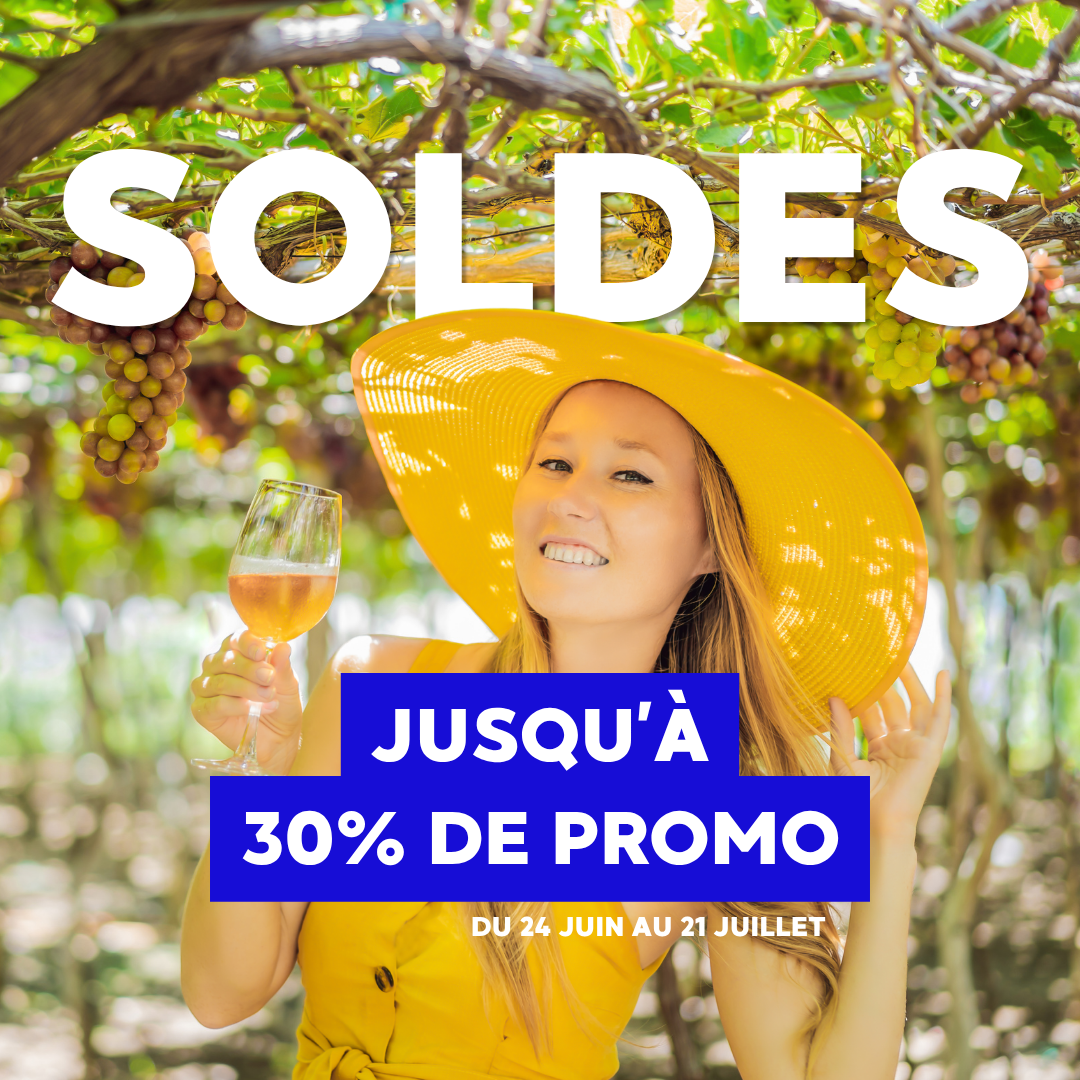
That is the whole point of our sale: up to -30% on a selection, not to slash quality, but to open a door for you. The ideal opportunity to finally try that wine, beer or spirit you have been eyeing from a distance — and to confirm, glass in hand, that it was well worth its price. If just one bottle makes you say "actually, that is really good", you will know exactly why it costs what it costs the rest of the year.
The best time to form your own opinion is now — and until Tuesday 21 July only.
450 references · Secure payment · Free delivery from €80
