
Removing alcohol from a drink takes away the calories from the alcohol. But it says nothing about the rest. And the rest — the sugar, the additives, the syrups added to compensate — is precisely where the real difference between a good alcohol-free bottle and a bad one is decided.
Here are five claims you often hear. Some are true. Others less so. All of them deserve to be laid on the table.
In brief Alcohol provides 7 kcal per gram — removing it mechanically reduces the calories. But some alcohol-free drinks compensate with sugar. The rule: read the sugar on the label, not just the calories. At Gueule de Joie, the selection guarantees a maximum of 2 to 4g of sugar per 100ml — three times less than the average for alcoholic drinks or classic soft drinks.
"Alcohol-free drinks are less calorific than alcoholic ones." True — but incomplete.
Pure alcohol provides 7 kcal per gram. That's more than carbohydrates (4 kcal/g) and almost as much as fats (9 kcal/g). Mechanically, removing alcohol from a drink reduces its calories.
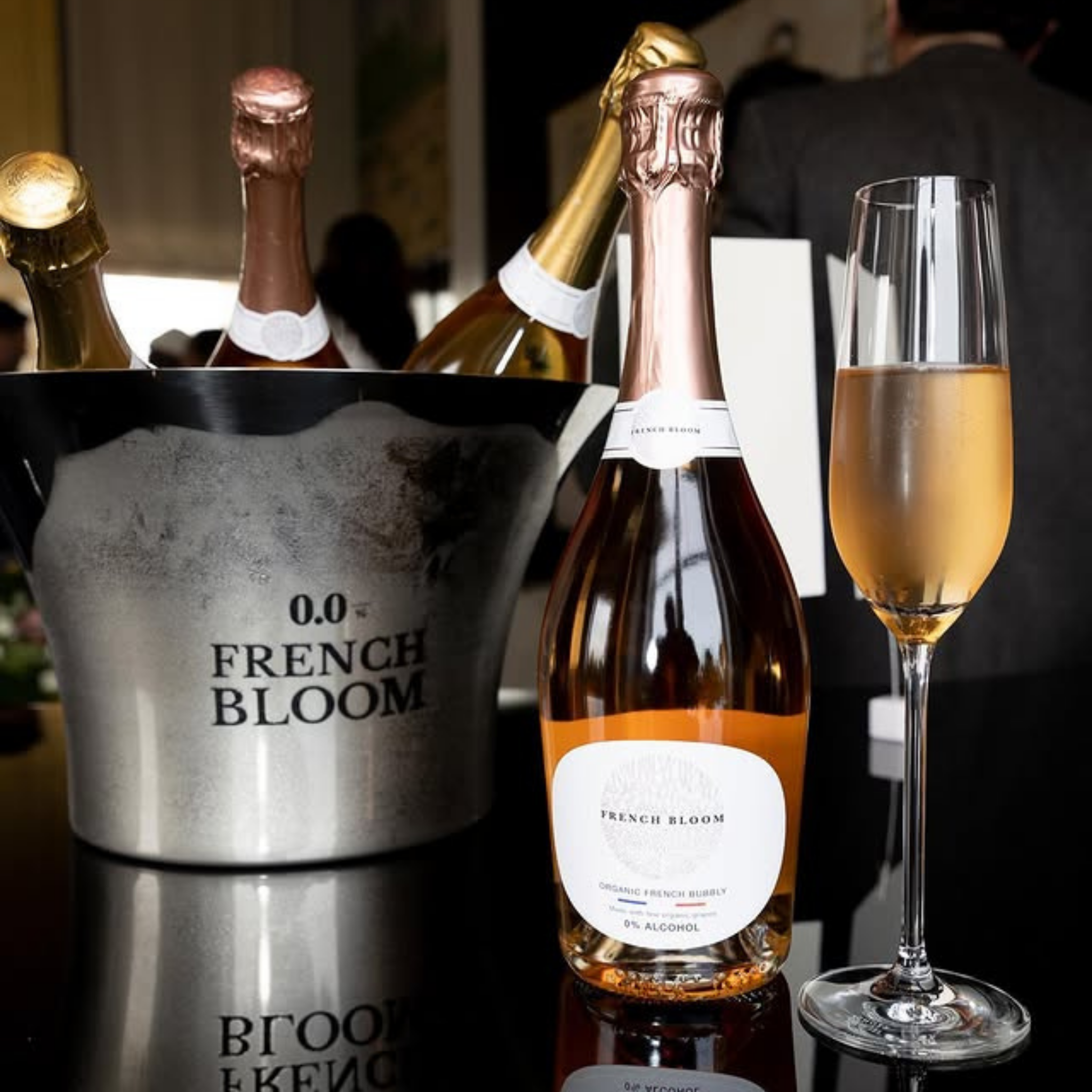
A classic rosé at 12.5% (10cl): around 80–85 kcal. The same volume in dealcoholised rosé: 20 to 35 kcal depending on the brand. A classic lager at 5% (25cl): around 120 kcal. An alcohol-free lager: 15 to 35 kcal per 100ml.
But this comparison only holds if the producer hasn't replaced the alcohol with something else. That's where it gets complicated.
→ Our alcohol-free wine selection · Craft alcohol-free beers
"All alcohol-free drinks are low in sugar." False.
This is the most dangerous misconception. When you remove the alcohol from a beer or a wine, you also lose a large part of the taste, the roundness, and the length on the palate that ethanol provided. The industrial temptation: compensate with sugar.
Result: flavoured alcohol-free beers (lemon, raspberry, ginger) can show up to 6–8g of sugar per 100ml, according to a survey by Radio Télévision Suisse (2025). On average, standard alcohol-free beers contain around 1g more sugar than their alcoholic equivalent — which remains moderate. But some heavily flavoured formats approach the level of light soft drinks.
Sugar is exactly where you should look first on an alcohol-free label. Not the calories — the sugar.
→ Low-sugar selection — less than 2.5g/100ml
"A craft alcohol-free beer is necessarily lighter." Not automatically.
The spirit is right, but the reality is more nuanced. What matters is the production method and the recipe — not the "craft" label alone.
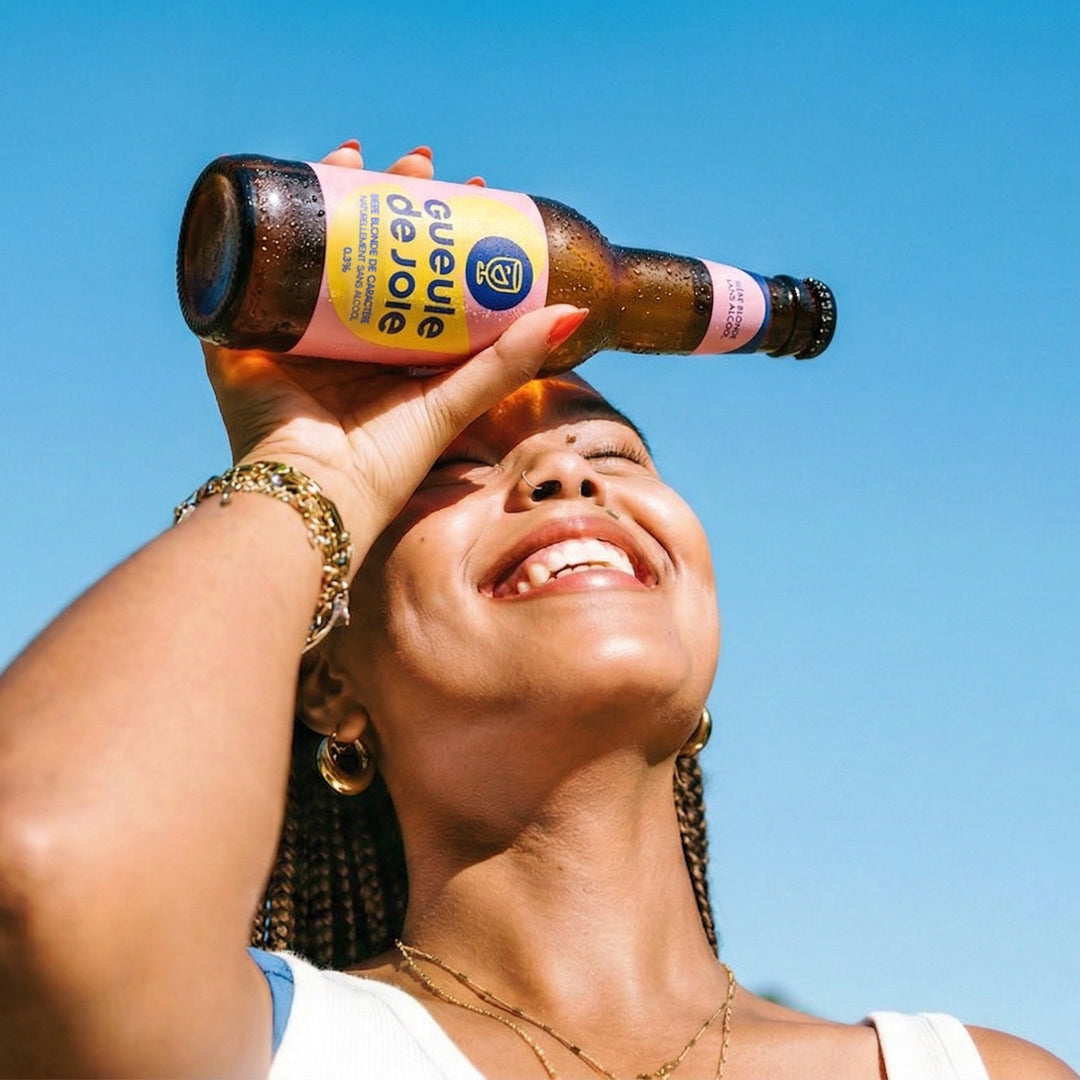
The best craft alcohol-free beers are designed from the outset to be at this alcohol level — that's the approach of the Gueule de Joie manifesto beer: brewed in Belgium at 0.3%, without dealcoholisation, without added sugars, without artificial flavourings. The result: a very well-controlled calorie profile.
But some craft alcohol-free beers, particularly rich styles such as stouts or certain IPAs, can reach 40–65 kcal/100ml depending on the ingredients. A well-crafted mass-market beer can be lighter than an ambitious craft one. The criterion that matters: read the technical sheet, not just the label.
→ Our Gueule de Joie manifesto beer
"Alcohol-free spritz is light." True — if you choose well.
A classic Aperol Spritz: 130 to 170 kcal per glass depending on proportions. A well-composed alcohol-free spritz (bitter base, sparkling wine, sparkling water): 30 to 50 kcal. The ISH Mojito ready-to-drink shows 38 kcal per 100ml — comparable to a kombucha.
The rule remains the same: very fruity or flavoured ready-to-drink cocktails can have a higher sugar profile. Check the product sheet before buying.
→ Ready-to-drink alcohol-free cocktails · ISH Mojito
"Choosing alcohol-free for the calories is a restrictive approach." False.
This is perhaps the most interesting one to dismantle. Reducing calories is not necessarily the driver behind choosing alcohol-free — and it doesn't have to be. But when the result is objectively better for the body, that's a benefit added to what was already a choice of taste and pleasure.
At Gueule de Joie, the position has been clear since 2019: we select drinks that are low in calories and sugar because it's a quality criterion — not because our customers are on a diet. A low-sugar drink is a drink whose aromas are not drowned out by sweetness. It's an honest drink.
→ The Discerning Profile · Functional drinks
What you should look at on a label
Not calories first. Sugar.
Less than 2.5g/100ml — that's the level of Gueule de Joie's low-sugar selection. Natural aromas dominate, not sweetness.
2.5 to 4g/100ml — the average range for well-made alcohol-free drinks. Acceptable, especially for beers or rosés with character.
Above 6g/100ml — the territory of heavily flavoured versions. It's not a dealbreaker, but it's a signal: the drink is compensating for an aromatic deficit with sugar.
Misconceptions to forget
"Alcohol-free = sugar-free." No. Sugar is independent of alcohol — and it's often what makes the difference in quality.
"All the calories are in the alcohol." Not only. Residual carbohydrates and added syrups also contribute.
"Craft = necessarily light." Not automatically. It's the brewing method and the recipe that determine the calorie profile, not the label alone.
"Alcohol-free taste means more sugar." That's what some industrial producers do. Not the craftspeople who work well. The proof is in every bottle in our selection.
Also worth reading
- Alcohol-free beer after sport: myth or genuinely good habit?
- How to build your alcohol-free summer bar
- The full low-sugar selection
Frequently asked questions
Do alcohol-free drinks make you put on weight?
Well-chosen alcohol-free drinks are significantly less calorific than their alcoholic equivalents. However, some flavoured formats compensate with sugar. Read the sugar content on the label — that's the right indicator.
How much sugar is in an alcohol-free rosé?
Quality dealcoholised rosés show 2 to 4g/100ml. The Gueule de Joie selection guarantees this maximum level across categories.
Is an alcohol-free cocktail less calorific than a classic cocktail?
Yes, as a general rule. A classic Aperol Spritz comes in at around 130–170 kcal depending on proportions. A well-made alcohol-free spritz: 30 to 50 kcal. The ISH Mojito: 38 kcal/100ml.
Are alcohol-free drinks suitable for people monitoring their blood sugar?
Low-sugar alcohol-free drinks (less than 2g/100ml) are generally compatible with a sugar-controlled diet. Please consult your doctor for personalised advice.
Where to find genuinely low-sugar alcohol-free drinks?
Gueule de Joie's low-sugar selection brings together only drinks containing less than 2g of sugar per 100ml.
Sources
Caloric value of alcohol (7 kcal/g)
- Nutritional composition of drinks — Wikipedia
- Alcohol calorie calculator — Diététicien-Nutritionniste-Santé.com
- Wine and calories — Wine In Moderation
Calories in wines and rosés
Calories and sugar in alcohol-free beers
- Alcohol-free beers: fewer calories, more sugar — RTS, July 2025
- Alcohol-free beer calories: how many does it really contain? — Déjà Bu?
- Top 23 sweetest alcohol-free beers — NomDUneBiere.com
- The calorie content of alcohol-free beer — Le Petit Ballon
Alcohol-free cocktails
- ISH Mojito product sheet (38 kcal/100ml) — Gueule de Joie
- Alcohol and weight gain — Clinique de la Croix d'Or
Gueule de Joie data (2 to 4g sugar/100ml, low-sugar selection)
Gueule de Joie — France's first alcohol-free wine merchant since 2019. Over 450 references selected for taste, available for 72-hour delivery throughout France.
