

The main course arrives, glasses are filled, and the alcohol-free bottle stays on the kitchen counter alongside the leftovers from the aperitif. It's a classic habit — opened for an initial toast, but rarely served to accompany a roast. Yet it is at the dinner table that these bottles truly shine: a crisp white with scallops, a supple red lightly chilled with poultry — each has its ideal moment and dish. You just need to know which one to uncork, and at what temperature. Here is our guide.
In brief: pop open sparkling wines for an aperitif (6–8°C), a dry white with seafood and vegetable dishes (8–10°C), a rosé when everyone at the table is eating something different, a light-to-medium red with poultry and mushrooms (12–14°C), and a full-bodied red with slow-cooked stews (16–18°C). The two pairings to avoid: very sweet desserts and overly rich, fatty sauces. Delivered in 72 hrs.
Always start with bubbles
The versatile choice everyone can agree on
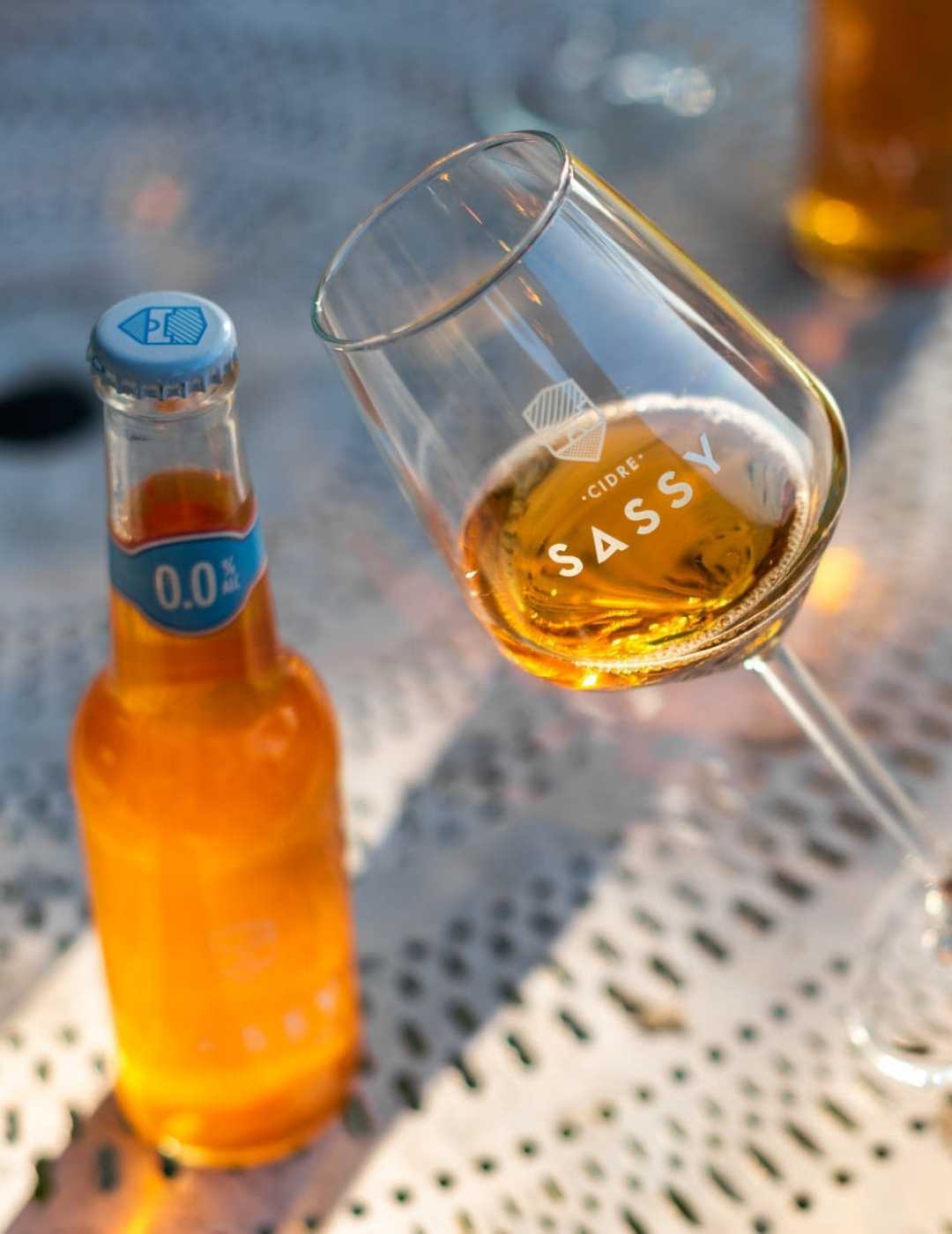
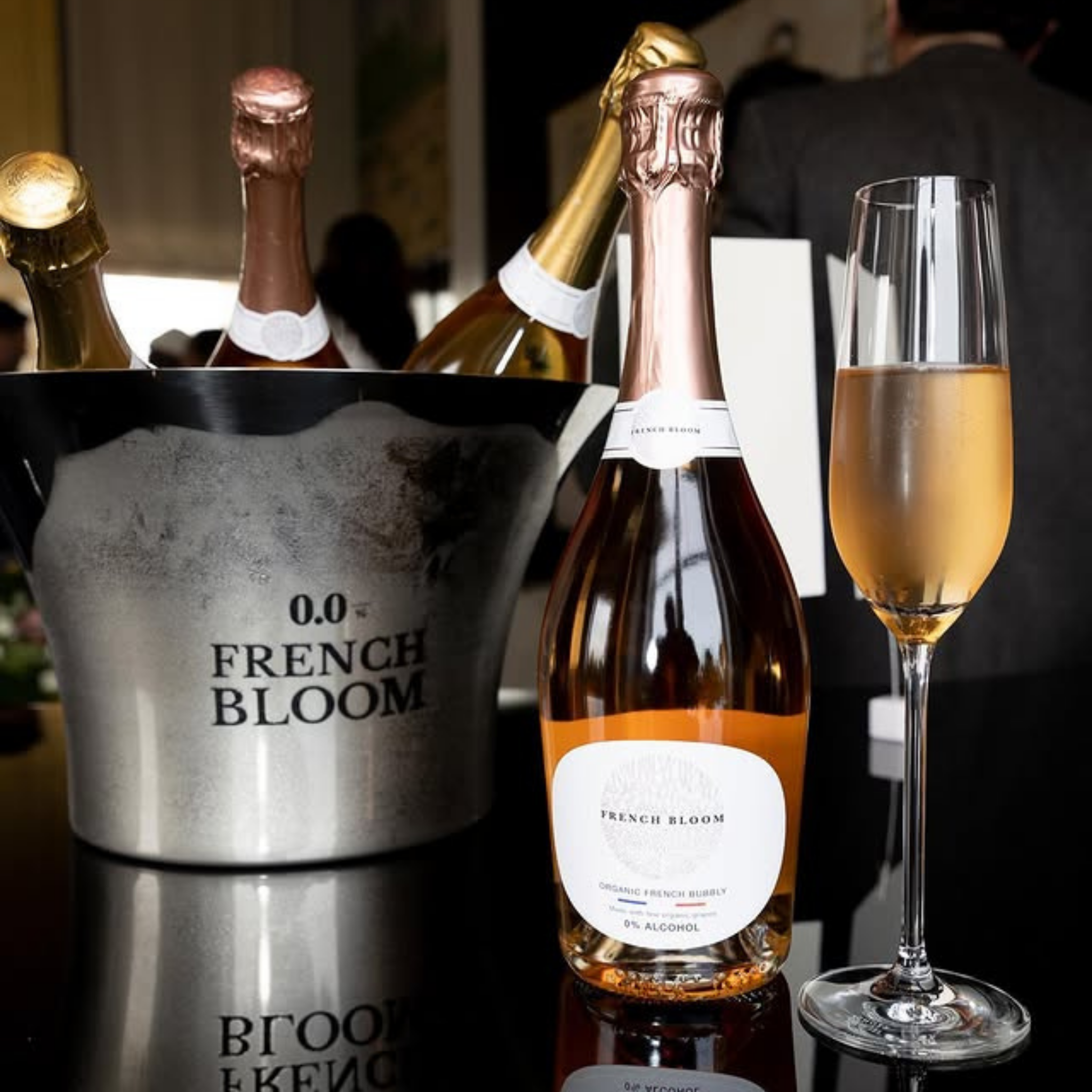
For the aperitif, sparkling wine is the undisputed crowd-pleaser. Technically, it is also the most seamless transition: the bubbles and acidity take over the body usually provided by alcohol, making the difference in mouthfeel minimal. Serve between 6 and 8°C, never ice-cold — below 5°C, the acidity overwhelms the fruit.
💡 Wine merchant's tip: a white wine glass rather than a flute. A wide glass releases the aromas on the nose, whereas a flute only shows the bubbles.
The perfect pairing: oysters, shellfish, fried bites and tempura, gougères, sushi, fresh strawberries.
→ Discover our alcohol-free sparkling wines
A dry white for seafood and greens
The most straightforward pairing in the range
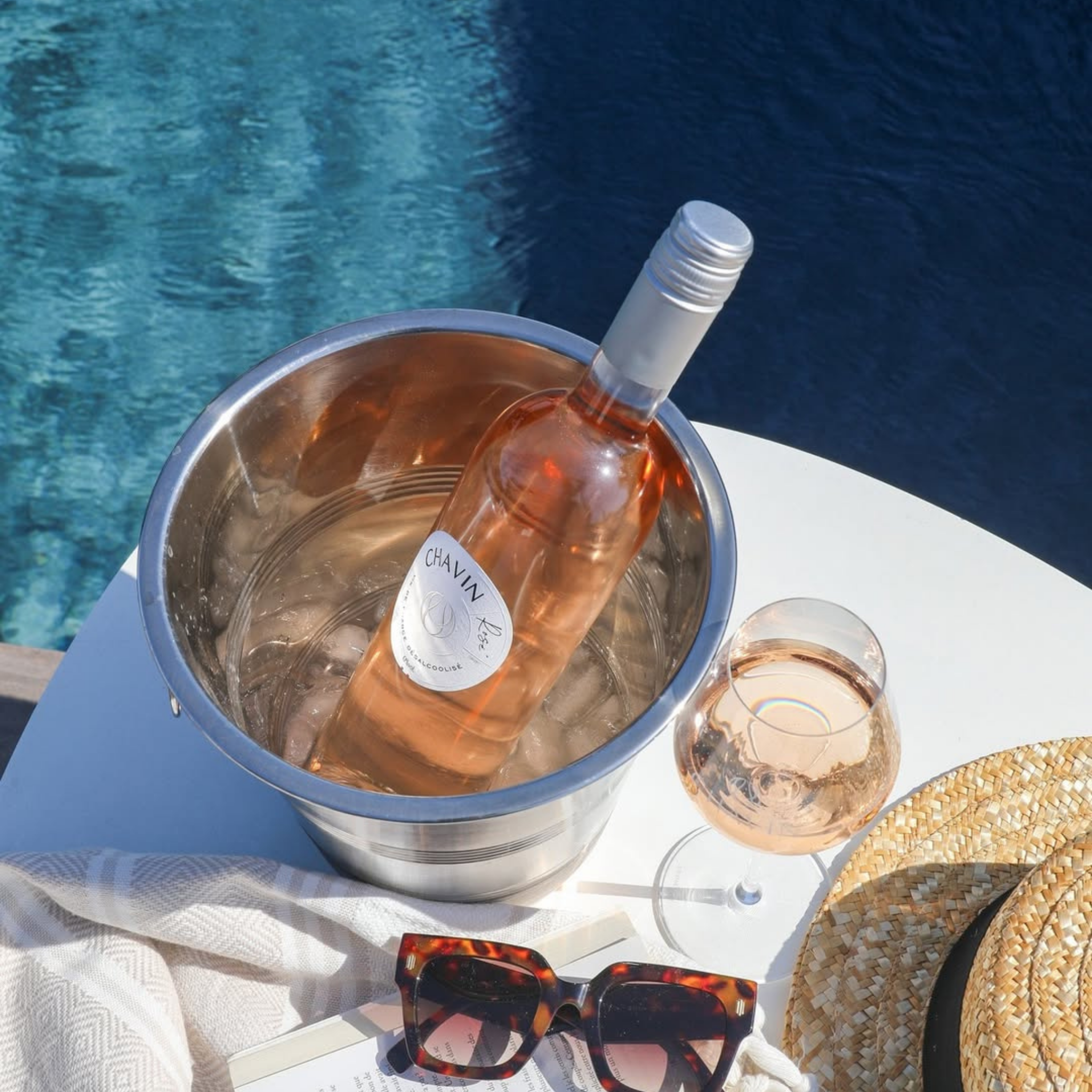
Dry whites boast the lowest sugar levels, making them the easiest to pair with food. Aromatic grape varieties perform best: UBY Sauvignon White (Gascony), crisp and mineral, effortlessly complements grilled fish. Chavin Zéro Sauvignon strikes a similar chord with more floral notes. Serve at 8–10°C.
💡 Wine merchant's tip: a squeeze of lemon juice in your dish works better than a rich, creamy sauce. The dish's acidity enhances that of the wine, whereas heavy fats overpower it.
The perfect pairing: baked sea bream, prawns, seafood platter, fresh goat's cheese, asparagus, lemon risotto.
→ Discover UBY Sauvignon and our alcohol-free white wines
Rosé: the go-to bottle for diverse menus
Enough acidity for seafood, enough fruit for grilled dishes
Rosé is the no-fuss option. With no harsh tannins, moderate acidity, and plenty of fruit, it is the bottle to open when everyone is eating something different. It is also the only style that works well with warm dishes — a tomato tart fresh from the oven, or a pizza. Where a white might fall flat, a rosé holds its own.
💡 Wine merchant's tip: serve at 8–10°C, not colder. An over-chilled rosé loses its fruit character, leaving only acidity.
The perfect pairing: grilled vegetables, tapas, cured ham, Salade Niçoise, pizza, cold roast chicken.
→ Discover our alcohol-free rosé wines
Reds: two styles, two occasions
Light reds for poultry, structured reds for stews
This is where we hear of the most disappointments, almost always down to serving temperature. A light, fruity red like Domaine de l'Arjolle's Merlot-Grenache is best served around 12–14°C and pairs beautifully with poultry, mushrooms or a charcuterie board. A fuller-bodied cuvée like Equinoxe Zéro Cabernet-Merlot or Moderato's White Merlot-Tannat calls for a hearty dish and room temperature, 16–18°C.
💡 Wine merchant's tip: no decanter needed. There is no alcohol to soften, and exposure to oxygen dulls the fruit within fifteen minutes. Simply open, serve, and reseal.
The perfect pairing: roast poultry, porcini risotto, charcuterie, and Brie for lighter reds; beef stew, herb-crusted lamb, and aged Comté for structured reds.
→ Discover Domaine de l'Arjolle's Merlot-Grenache and Moderato's Red
The two pairings that just don't work
Sweet desserts and overly rich sauces
A sweet dessert cancels out the perception of sweetness in the wine, leaving only stark acidity: rounder wines are far better suited to Roquefort or curry than to a tart. As for heavy, rich sauces, they require bold tannins for balance — precisely what dealcoholised wine lacks. Focus on salt and acidity rather than fat and sugar, and the pairing will work seamlessly.
💡 Wine merchant's tip: when serving spicy food, go against your first instinct and reach for a wine with a touch of roundness. Residual sweetness softens chilli heat, whereas a very dry white only sharpens it.
Which glassware for which occasion?
For an aperitif, sparkling wines at 6–8°C. For a seafood or vegetable starter, a dry white at 8–10°C. For a white meat or vegetable main, a light red at 12–14°C — or a rosé if guests are having different dishes. For a slow-cooked stew or red meat, a structured red served at room temperature. And for cheese, a rounded white pairs far better with blue cheese than a red, which is best kept for hard pressed cheeses. Allow one bottle for every three guests over a full meal.
You might also like
- Alcohol-free red wine: the guide to choosing the right bottle
- Alcohol-free white wine: the guide to choosing the right bottle
- How to taste an alcohol-free drink like a pro
Frequently asked questions
At what temperature should you serve alcohol-free red wine with a meal?
Between 12 and 14°C for a light and fruity red, 16 to 18°C for a structured wine paired with a slow-cooked dish. Half an hour in the fridge is all it takes to lightly chill a bottle.
Which alcohol-free wine should you serve with spicy food?
Opt for a slightly rounded cuvée rather than a bone-dry white: a hint of sweetness tempers spice, whereas acidity alone intensifies it. It is the pairing that surprises guests most with Thai or Indian cuisine.
How long does an open bottle keep?
Three to five days in the fridge for a red, white, or rosé; two days for a sparkling wine. Because alcohol acts as a natural preservative, these wines are more prone to oxidation.
Should you decant an alcohol-free wine?
No. Decanting is designed to soften tannins and open up aromas masked by alcohol, which is not an issue here. Above all, it speeds up the loss of fresh fruit flavours.
Gueule de Joie — France's leading alcohol-free wine merchant since 2019. Over 500 options curated for taste, delivered within 72 hrs across France (free delivery on orders over €80).
