
It was a Christmas Eve like so many others. Santa Claus, after centuries of impeccable service, had decided, just this once, to relax before his great annual tour. In a quiet corner of his workshop, an old barrel of elf wine — an ancient and extremely potent drink — was waiting for him. Santa, thinking that a small glass couldn't do any harm, poured himself one… Then a second. Very quickly, the alcohol went to his head, but, confident in himself, he climbed into his sleigh all the same.
The reindeer, sensing something was wrong, hesitated. But Santa Claus, with a tipsy grin, called out to them: "Come on, my friends, it's time to make the children's dreams come true!" With a crack of the whip, the sleigh launched into the starry sky. But this time, something was different. The reindeer were flying in zigzags, and Santa, overcome with dizziness, was giving them incoherent directions.
The Christmas nightmare
The first house he landed at was little Emma's. Santa Claus, struggling to come down the chimney, took a spectacular tumble into the living room. In his confusion, he laid down the gifts haphazardly: toys for the adults and bottles of wine for the children. Without realising it, he had just set in motion a night of disaster that would upend the world for ever.
The mistakes multiplied at a frightening pace. In some houses, he forgot to deliver gifts altogether. In others, he left strange packages: dangerous tools, malfunctioning electronic gadgets, and even prohibited items. But that was only the beginning of the chaos.
Santa Claus, in his advanced state of inebriation, lost all sense of time and space. Rather than keeping a low profile, he appeared in the middle of a street in a small town. The stunned locals watched in horror as Santa staggered about, trying to climb a lamp post as though it were a chimney. Photos and videos were immediately taken and shared around the world, causing a global shockwave.
The world with a hangover
The next morning, social media erupted. Millions of children woke up to completely inappropriate gifts — or nothing at all under the tree. Families were outraged, and governments were quickly drawn in. Emergency psychologists were dispatched to deal with the trauma of children who had seen their Christmas dream turn into a nightmare.
Worse still, the very magic of Christmas began to fade. The illusion of a wonderful world in which a kind man travelled the Earth in a single night to deliver gifts collapsed. The revelation that Santa Claus could fail — and worse, be human with weaknesses as common as alcohol — plunged the world into deep doubt.
The media were broadcasting images of Santa staggering, talking to himself, leaving burst packages in his wake. Children were crying as they discovered broken toys or terrifying objects such as knives or hunting gear. Some even had nightmares for weeks, convinced that Santa, in a fit of madness, would return to destroy Christmas for ever.
Governments around the world convened in emergency session to understand what had happened. The debate raged: should Santa Claus be banned? Should he be overseen by a special authority? The elves themselves were questioned, and some fled the workshop for fear of reprisals. Faith in the spirit of Christmas collapsed as never before.
Toy companies, in a panic, launched emergency repair campaigns, offering to replace the defective gifts. But nothing could erase the truth now laid bare: Santa Claus was fallible, capable of monumental mistakes.
The consequences were catastrophic. Worried parents decided to break with tradition and abandon Christmas. Trees were left bare, fireplaces unlit, and the world sank into a period of mourning for what had been lost. That Christmas marked the end of an era of magic, innocence, and shared hope.
Yet, amid all this débâcle, there was a lesson to be drawn. Santa Claus himself, weighed down by shame and regret, understood that he could no longer afford to abandon himself to alcohol and its excesses. What he needed was not escape in an intoxicating drink, but a new way of rediscovering that joyful energy, of reconnecting with the true magic of Christmas: the kind that is born in hearts, in shared love, and in the authenticity of smiles.
Gueule de Joie: towards a new kind of magic
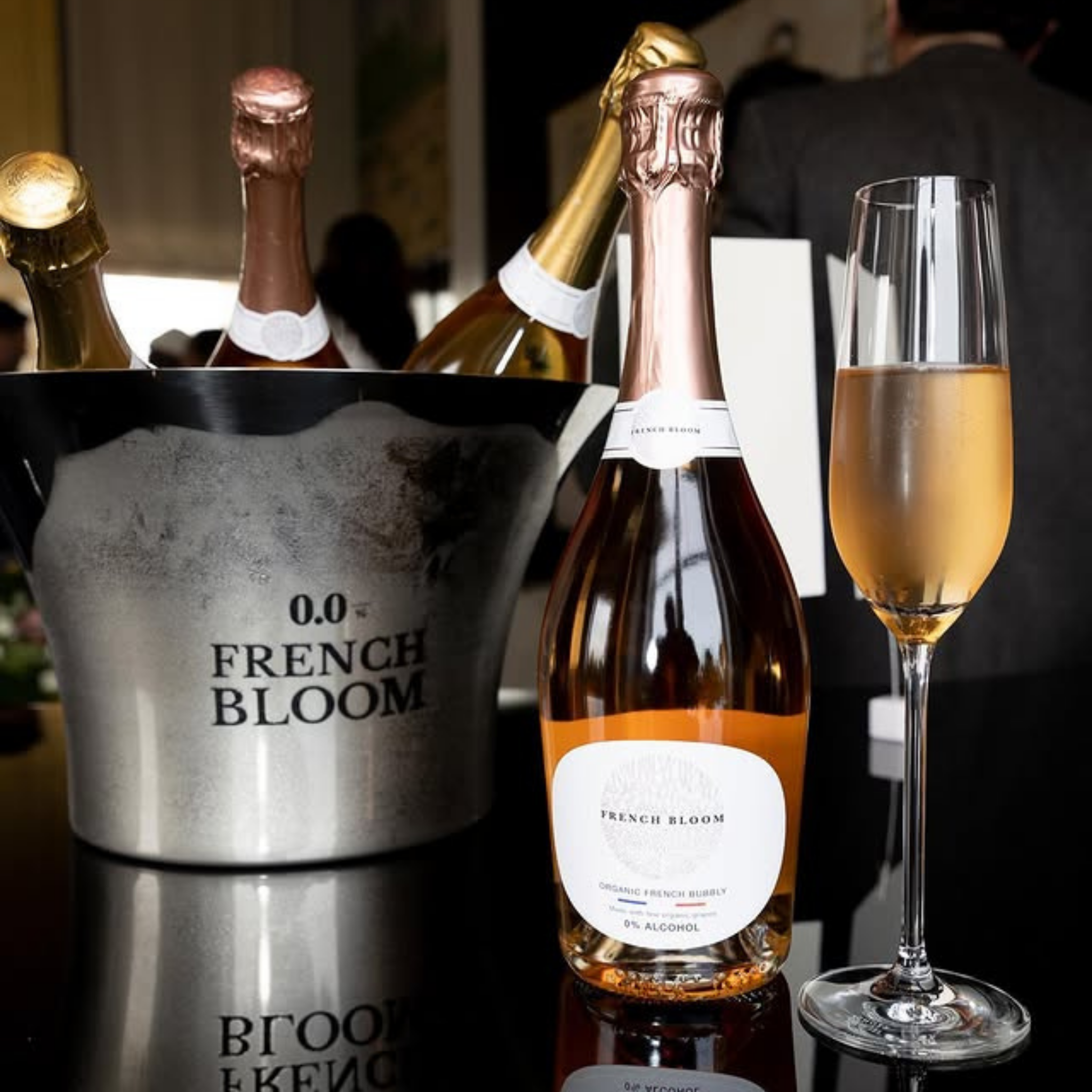
If only, that night, Santa Claus had known Gueule de Joie, things would have been very different. Rather than losing himself in the excesses of elf wine, he could have raised a glass with a bottle of sparkling kombucha or an alcohol-free cocktail as surprising as it was festive. The reindeer would have flown straight, the gifts would have found their rightful recipients, and the children would have woken up with stars in their eyes.
With Gueule de Joie, Santa Claus would have discovered that it is not necessary to get drunk to feel the magic, and that true joy lies in sincere sharing and genuine wonder. Because bringing happiness is not about a bottle, but about choices that bring people together and celebrate life, simply and naturally.
And who knows? Perhaps by choosing Gueule de Joie, Santa Claus would not only have saved that fateful night, but also inspired the whole world to dare a new way of celebrating. A way where we raise a glass to magic and not to oblivion, where every smile becomes a gift, and where the intoxication of the moment is born from a life full of lightness and shared love.
So, at Christmas as in everyday life, why not do what Santa Claus should have done and choose Gueule de Joie? After all, true magic is the kind that makes everyone happy, without ever losing one's way.
