
There is always that moment, in a restaurant or at a friend's home, when someone places a bottle on the table. The label says "organic fig kombucha". Everyone nods politely. Nobody really knows what it is — or whether it is going to taste good.
The alternative soft drinks category has exploded in the past five years. Kombucha, fruit kefir, ginger beer, maté, sparkling tea — these names are everywhere, on restaurant menus, in conversations, on your Instagram feed. But nobody has explained the difference. The result: a great deal of curiosity, very little clarity, and too many unpleasant surprises at the first sip.
Alternative soft drinks — in brief
Six families, six profiles: Kombucha (fermented tea, dry and acidic) · Fruit kefir (fermented water, gentle and light) · Ginger Beer (infused ginger, spiced and lively) · Maté (energising infusion, bitter and herbaceous) · Sparkling tea (naturally carbonated, delicate) · Craft Sodas & Lemonades (accessible, fruity, no artificial ingredients). Choosing at random means risking disappointment. Choosing with method means finding your drink of the summer.
Before you choose: three questions to avoid getting it wrong
The right alternative soft drink for whatever you're in the mood for
You don't need to know everything to make the right choice. Three questions are enough.
I want complexity and bite → kombucha or artisanal ginger beer. These are the two most assertive profiles — acidic and fermented for the first, spiced and lively for the second.
I want something gentle and accessible → fruit kefir or artisanal lemonade. These drinks require no palate education. They are immediately appealing and suit everyone.
I want natural energy → maté. I am looking for refinement at the table → sparkling tea. I want to win over a sceptic → ginger beer or craft lemonade.
💡 The wine merchant's tip: if you are hosting an aperitif and you are not sure what your guests enjoy, start with an artisanal ginger beer and a craft lemonade. The ginger aroma is immediately identifiable — no palate can resist it.
The perfect pairing: a starter spread — olives, artisanal crisps, hummus, breadsticks. These drinks fit naturally into any aperitif setting without needing any explanation.
Kombucha — the most well-known, the least well-understood
A fermented drink that deserves better than its reputation as a "health drink"
Kombucha is sweetened tea fermented by a symbiotic culture of bacteria and yeasts — the famous "mother" or SCOBY. Fermentation consumes most of the sugar and produces a natural effervescence, a slight acidity, and complex aromas that no industrial recipe can replicate.
The result is a sparkling, dry drink with a genuine length on the palate. The aromatic profile depends on the base tea — black, green or white — the added botanicals and the length of fermentation. A black tea kombucha will be fuller-bodied. A green tea kombucha will be more vegetal.
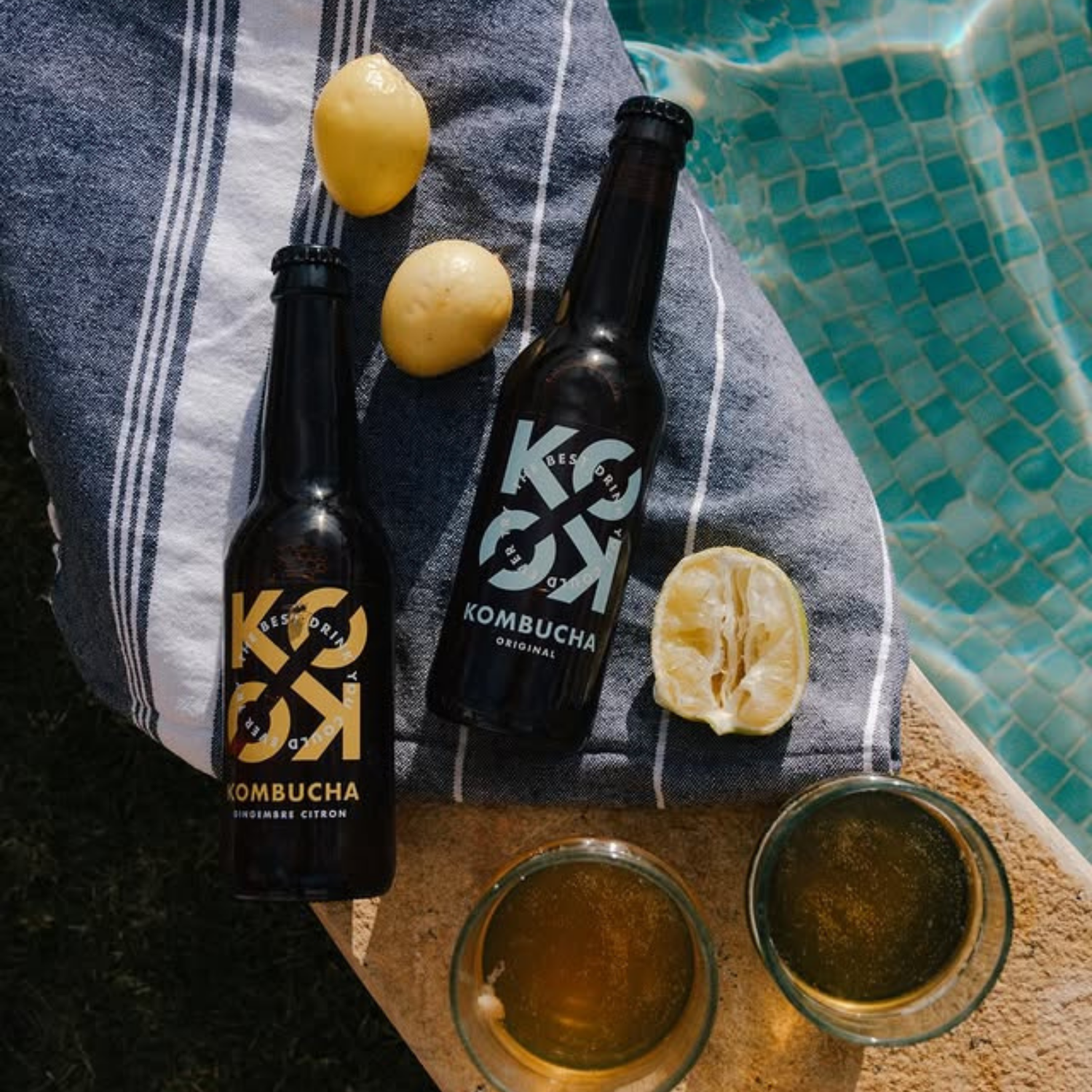
Our recommendation: KOKO Kombucha, brewed in France from Yunnan and Sencha teas, with no added flavourings. Dry, tangy, complex.
💡 The wine merchant's tip: the quality of a kombucha can be read in its acidity. Too flat, too sweet? It has been over-pasteurised — the delicate aromas have disappeared. A good kombucha has bite, a slight liveliness on the finish, and a natural carbonation. If you drink one and think "that's unusual" — that's a good sign.
The perfect pairing: a board of aged cheeses, charcuterie, assorted tapas. The natural acidity of kombucha cleanses the palate between bites, exactly as a crisp wine would.
Fruit kefir — the overlooked fermented drink
Softer than kombucha, more complex than a soda
Not to be confused with milk kefir. Fruit kefir — also known as water kefir — is made by fermenting kefir grains in sweetened water, often flavoured with fruit or ginger. Fermentation consumes the sugar, produces a light and natural effervescence, and develops a fruity and delicate profile.
The result is gentler than kombucha: less acidic, more discreet effervescence, a more accessible aromatic profile. It is often the favourite fermented drink of those who find kombucha too distinctive. Naturally low in sugar, it fits perfectly into a well-being routine.
💡 The wine merchant's tip: fruit kefir is best drunk very cold — 4 to 6°C — and without ice cubes. Meltwater dilutes an already naturally discreet effervescence. Consume within 24 hours of opening. This is not a drink that keeps.
The perfect pairing: brunch, fresh fruit, savoury cake, light sandwiches. Fruit kefir pairs with gentle flavours without ever overpowering them.
Ginger beer — the essential summer aperitif drink
Not a ginger soda — a drink with genuine character
Ginger beer is one of the most misunderstood drinks in its category — and above all, the one most often confused with ginger ale. Yet these are two radically different products.
Ginger ale is an industrial lemonade lightly flavoured with ginger. Artisanal ginger beer is infused from fresh ginger — the result is far more powerful, spicier, and more present on the palate. That tingling that rises to the sinuses, that gentle warmth on the finish — that is what a real ginger beer should deliver.
It is also the perfect base for many alcohol-free cocktails — Moscow Mule, Dark & Stormy, Ginger Spritz. One bottle, ten possibilities.
💡 The wine merchant's tip: to test a ginger beer, take a sip at room temperature, without ice. If you can't taste the ginger, move on — the cold will mask the aroma even further. A good ginger beer asserts itself, even when slightly warm.
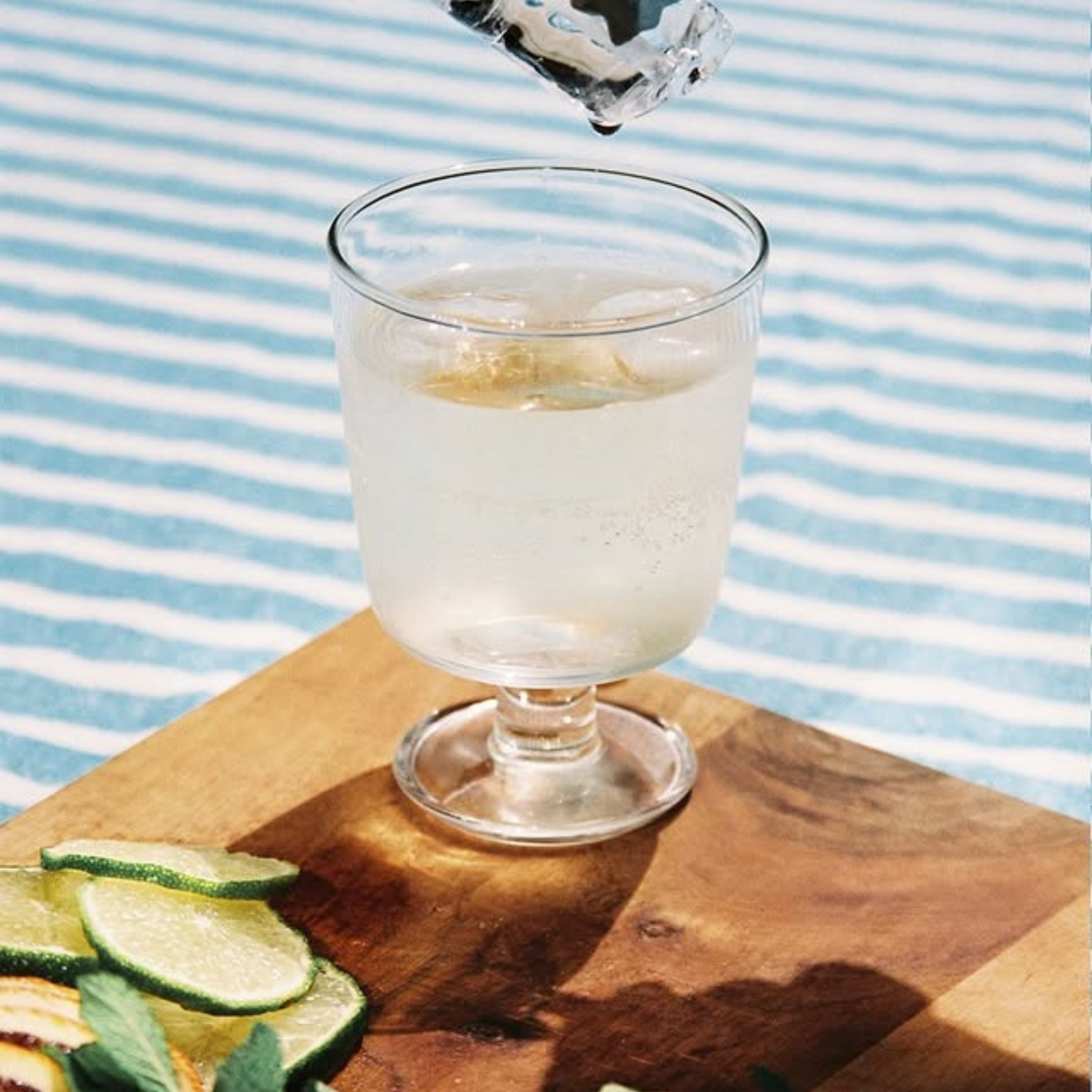
The perfect pairing: grilled merguez, spiced dishes, tacos, or simply over ice with a squeeze of lime. It is the perfect base for an alcohol-free Moscow Mule — ice, ginger beer, lime. Three ingredients, ten seconds, a proper cocktail.
Maté — the natural energy that surprises
For those who want to stay alert without giving up on pleasure
Maté is a South American infusion made from dried yerba maté leaves. Naturally rich in caffeine and theobromine, it provides a gentle and long-lasting energy — without the spike or the crash of industrial energy drinks. In its ready-to-drink, cold and lightly flavoured form, it is the drink for the active aperitif: for those who are driving tonight, who have a busy day tomorrow, or who want to stay alert right to the end of the evening.
Its profile is herbaceous, slightly bitter, with vegetal notes reminiscent of green tea — but with more body and presence.
💡 The wine merchant's tip: maté is best served between 4 and 6°C, over ice if you wish. Its slight bitterness makes it a great companion for savoury aperitif snacks — it holds its own against olives, crisps and charcuterie without fading into the background.
The perfect pairing: a summer aperitif, a tapas board, a light meal on the terrace. Also great served at lunch to keep you going through the afternoon without fatigue.
Sparkling tea — delicacy in a bottle
For moments that deserve to be savoured, not just drunk
Sparkling tea is exactly what its name promises: infused tea, carbonated, sometimes lightly sweetened. But the apparent simplicity conceals a real diversity — green tea, white tea, black tea, matcha — each base yields a unique aromatic profile. It is the most subtle drink on this list. Less acidic than kombucha, less spiced than ginger beer, more complex than flavoured water. It finds its natural place in our selection of gastronomic drinks on carefully laid dinner tables.
💡 The wine merchant's tip: serve sparkling tea in a wine glass rather than a straight-sided glass — the shape concentrates the delicate aromas and completely changes the perception on the palate. At 8°C rather than 4°C, the nuances express themselves better.
The perfect pairing: delicate fish, fresh goat's cheese, floral or fruity desserts. Sparkling tea elevates subtle flavours — it gets lost with bold dishes.
Craft Sodas & Lemonades — the perfect entry point
For those who have never explored the category
The Soda & Lemonade category at Gueule de Joie has nothing in common with what you find in supermarkets. No colourings, no artificial flavourings, no excess sugar — recipes built on real infusions, genuine fruit juices, plants and spices. These drinks are the most accessible on this entire list: they require no palate education and are immediately appealing.
This is often where curiosity about alternative soft drinks begins. A well-crafted ginger-lemon lemonade shatters the "alcohol-free = bland" prejudice more effectively than any argument.
💡 The wine merchant's tip: if you are hosting an aperitif for a mixed group, put an artisanal lemonade and a ginger beer on the table. These are the two references that convert sceptics most quickly. One sip, and the prejudice falls away.
The perfect pairing: buffets, light aperitifs, afternoon snacks, festive moments where everyone needs to find something they enjoy at the same time.
Misconceptions to leave behind
"It's just a disguised soda." No. A kombucha fermented for several weeks from tea has nothing in common with a sweetened industrial lemonade. The gap is as wide as between a sourdough loaf and a sliced white bread.
"It'll feel odd at an aperitif." Since 2019, we have sold alternative soft drinks to tens of thousands of customers. Many have told us that their guests asked for the reference.
"Ginger beer and ginger ale are the same thing." Ginger ale is an industrial lemonade lightly flavoured with ginger. Artisanal ginger beer is infused from real fresh ginger — the result is incomparable in terms of intensity and complexity.
"Kombucha is for people who do yoga." Kombucha is above all for people who enjoy complex, low-sugar drinks. If you like dry cider or crisp wine, you stand every chance of liking kombucha.
"Maté is an energy drink." Maté contains natural caffeine — but no taurine, no fast sugars, no additives. The effect is closer to a strong tea than a can of Red Bull.
Where to start?
Artisanal ginger beer or a craft lemonade — that is the safest entry point. Once curiosity is piqued, kombucha is the natural choice for those seeking more complexity. Fruit kefir for those who prefer something gentler. Maté for evenings when you want to stay alert. Sparkling tea for meal times and tasting moments.
There is no order. There are just drinks waiting to be opened.
Our full alternative soft drinks selection
Our discovery gift sets to get started
Further reading
- Alcohol-free beer after sport: myth or genuine reflex?
- Alcohol-free drinks and calories: fact vs fiction
- How to put together your alcohol-free summer bar
Frequently asked questions
What is the difference between kombucha and fruit kefir?
Kombucha is fermented from sweetened tea — more acidic, more distinctive, with a genuine aromatic complexity. Fruit kefir is fermented in sweetened water — gentler, lighter, more accessible. If you are unsure, start with the kefir and work your way up to kombucha.
Does ginger beer contain alcohol?
The artisanal ginger beers in our selection are 0.0%. Always check the product page if you have a strict 0.0% requirement.
Is maté an energy drink?
Maté naturally contains caffeine and theobromine. Unlike industrial energy drinks, it contains no taurine or fast sugars — the energy is gentler and longer-lasting.
Is kombucha suitable for pregnant women?
Some kombuchas may contain very slight traces of alcohol from fermentation. As a precaution, check that the chosen reference is certified at 0.0% and consult your doctor.
Can I use these drinks in alcohol-free mixology?
Absolutely. Ginger beer is the base of the alcohol-free Moscow Mule. Kombucha makes an excellent substitute for tonic in many recipes. All our cocktail recipes are available on the website.
Gueule de Joie — France's first alcohol-free wine merchant since 2019. Over 450 references selected for taste, available with 72-hour delivery across France.
