

The festive season is fast approaching and we are all delighted to be able to share (at last) convivial moments with our loved ones. That said, let us remember to keep things in perspective and moderate our alcohol consumption. But let us make no concessions on pleasure. Even without alcohol, the drinks that accompany your meals should follow a certain order. You should always start the aperitif with bubbles, to wake up the palate! Then, move on to a well-chilled dry white wine for the starter, followed by red wine for the main course, and finish with a sweet, mellow wine at dessert time. These timeless rules apply equally to the alcohol-free wines we invite you to discover over a festive meal.
"It is possible to experience drinks in a new way that doesn't set alcohol against alcohol-free, but draws the best from both so you never have to choose."
Which wine for the aperitif?
With or without alcohol, bubbles are a must to start a festive meal. The aperitif, a cherished and convivial moment, often precedes a hearty dinner and must absolutely remain light. Its role is to whet the appetite. Sparkling wines are therefore particularly well suited.
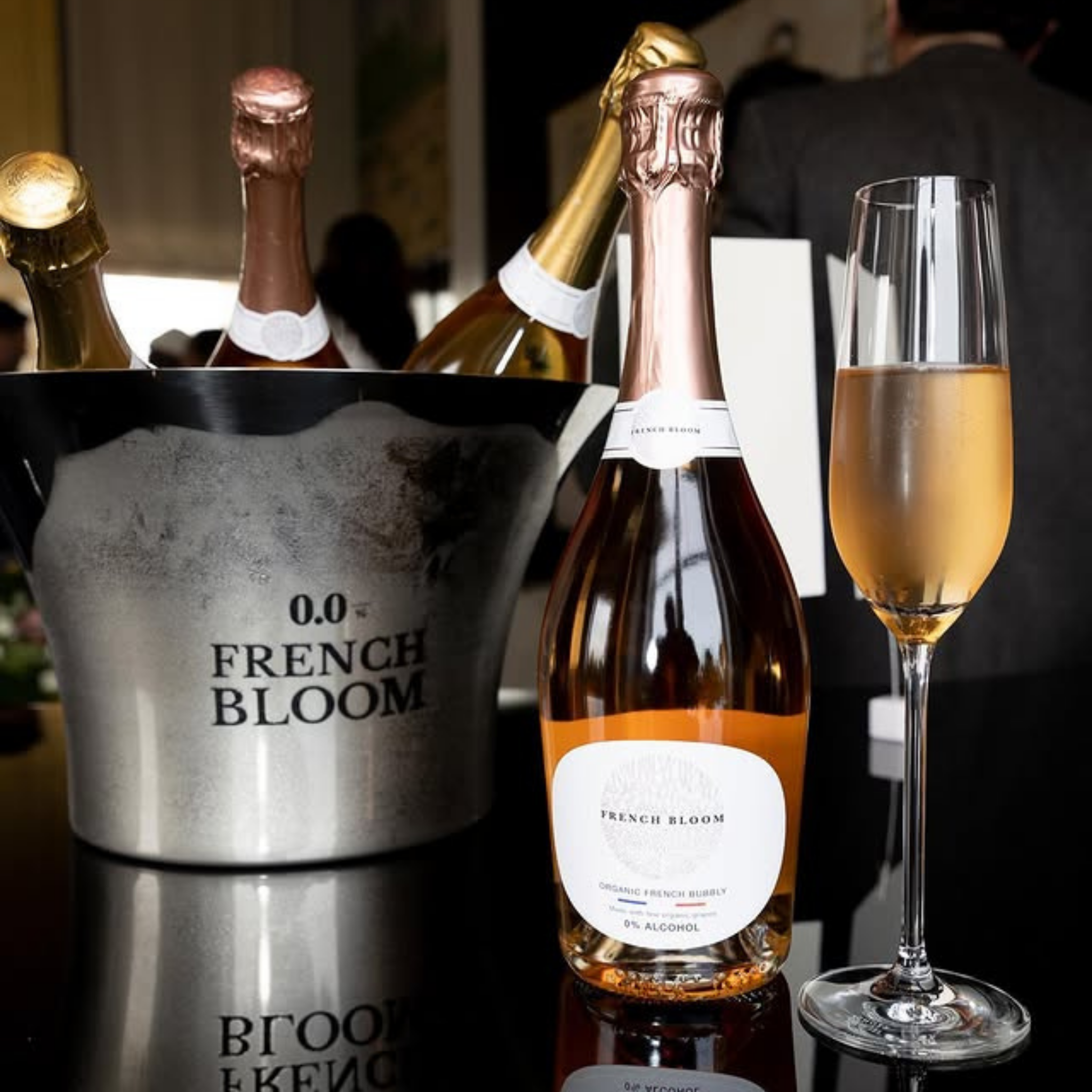
Alcohol-free sparkling wines allow everyone to rediscover a sense of conviviality over a glass. They offer fine, delicate bubbles, and you will appreciate their freshness and their notes of flowers and fruit.
For their vivacity, opt for a blanc de blancs or a chardonnay-dominant wine that will delight your palate without "weighing it down".
Sparkling rosés can also find their place at the aperitif. Their subtle, fresh aromas and a soft, silky texture make them a formidable ally when paired with serrano ham, aperitif breads, cubes of comté, or parmesan, for example.
You can also let yourself be tempted by the spiced and fruity aromas of an alcohol-free sparkling muscat. This sweet sparkling wine will perfectly accompany dishes that play on the contrast of sweet and savoury flavours, such as brioche toasts with raisins, foie gras toasts, cheese gougères with goat's cheese…
Which wine with oysters?
A Christmas evening without oysters is very rare. So if you want a starter without a false note, we'll pair our oysters with an alcohol-free wine that suits their briny character — and more besides…
The classic choice is undoubtedly a dry white wine. The Sauvignon d'Appalina or the Équilibre zéro Viognier Sauvignon du Domaine de l'Arjolle will do perfectly well, whether we are enjoying our oysters with just a little pepper, a squeeze of lemon, or a shallot vinaigrette.
If you want to mix things up a bit and offer your guests warm oysters, La Côte de Vincent Effervescent, for example, will add a touch of fizz and acidity to your starter!
And for beer lovers, a good dark Stout or Bock style will be a perfect match with plump, meaty oysters. It's something too few people know, but the briny flavours of the oyster blend perfectly with the roasted, slightly bitter chocolate notes of these beer styles. A great classic not to be missed.
Red or white with seafood?
White wine takes centre stage during Christmas meals where seafood features as a starter. But what do you do if you're not particularly fond of white wine?
Even if it's true that the tannins of red wine are not really recommended with the briny character of seafood, we can still try enjoying our prawns and winkles with a light and fruity alcohol-free red wine, such as the Pinot Noir sans alcool du Petit Bérêt or le Cabernet Sauvignon du Petit Etoilé for example.
Which wine with turkey?
At Christmas, white-fleshed poultry is often the star of the Christmas Eve dinner: whether it's turkey with chestnuts or stuffed capon, it's always a treat! But which wine should you choose to perfectly complement your poultry?
For red wine lovers, opt for alcohol-free wines that are rather refined, slightly tart, and stripped of their tannins so that the wine doesn't clash with the poultry. Conveniently, alcohol-free wines concentrate their organoleptic qualities on the roundness of the fruit and will pair perfectly with white meat. For example, let yourself be surprised by the Merlot Grenache sans alcool du Domaine de l'Arjolle. A frank, aromatic, and indulgent nose. A round, flavoursome palate with a gentle structure. A delightful surprise.
Appalina Cabernet Sauvignon and Pierre Zéro Prestig Rouge will also be suitable.
For white wine lovers, opt for a grape variety that is not too sweet and offers a minimum of body and depth, such as the Chardonnay du Petit Bérêt made from grape varieties from the south of France.
Which wine with cheese?
Eating cheese with a good red wine is practically a French culinary tradition. Yes, but… In reality, a good, lightly fruity white wine will work wonders with a cheese board at the end of a meal!
- Pierre Zero Chardonnay
- Petit Etoile Chardonnay
Well, if you're a red wine lover and simply cannot consider eating cheese with a white wine, that's fine. Alcohol-free red wine is rather soft and will complement the cheese rather than clash with it. Pierre 0% Rouge will be a fine ally. It has a deep ruby robe with brilliant highlights and a nose with intense aromas of red fruits. Its freshness, youthfulness, and balance will delight you.
Which wine with foie gras?
The great classic of festive tables is wonderfully suited to a mellow, fruity wine. But contrary to popular belief, to truly appreciate this pairing, we recommend it at the end of the meal, before dessert. Simply because if you start with a sweet wine from the very first course, your palate will be overloaded.
To accompany this moment, we offer you an alcohol-free sweet wine crafted from a late-harvest Chardonnay. Boasting a golden yellow robe with brilliant highlights, Pierre 0% Prestige Blanc reveals a nose with aromas of peach and white flowers. Its generous, richly rounded palate offers scents of apricot, vanilla, and honey, sublimated by an infinite softness.
The pairing with foie gras will be remarkable. And if the bottle is not finished, you can perfectly well continue your meal with this wine at dessert time.
Which wine with a red fruit Christmas log?
To pair the red fruit log with an alcohol-free wine, we recommend the effervescent Pierre 0% Rosé, which you may have already opened at the aperitif. An alcohol-free sparkling wine, dressed in a pale pink robe with brilliant salmon highlights. Fine, delicate bubbles; its nose releases muscatel, floral, and fruity aromas of redcurrant and raspberry. On the palate, the pink mousse is full of softness, freshness, and persistence, to finish your meal on a sparkling note. And if you want to try another pairing, the Appalinat Pinot Noir Effervescent will also be well suited. You will appreciate its pleasant bouquet of red berries and its beautiful robe revealing fine, delicate bubbles. It presents a very fine fruity, fresh, and balanced harmony on the palate.
As you will have gathered, alcohol-free wines have their part to play in the smooth running of a festive meal. Their fruity, tangy, or sweet notes will pair perfectly with a great number of dishes for your utmost pleasure. And the advantage of going alcohol-free is that you will remain in control of your choices for your own well-being and that of your loved ones.
We wish you many pleasant moments.
